Editorially reviewed: September 2026.
As the second letter of the English alphabet, B is familiar on the page but not always simple in pronunciation or use. English spelling is not a one-letter/one-sound system, so this page explains the most useful patterns without turning them into absolute rules.
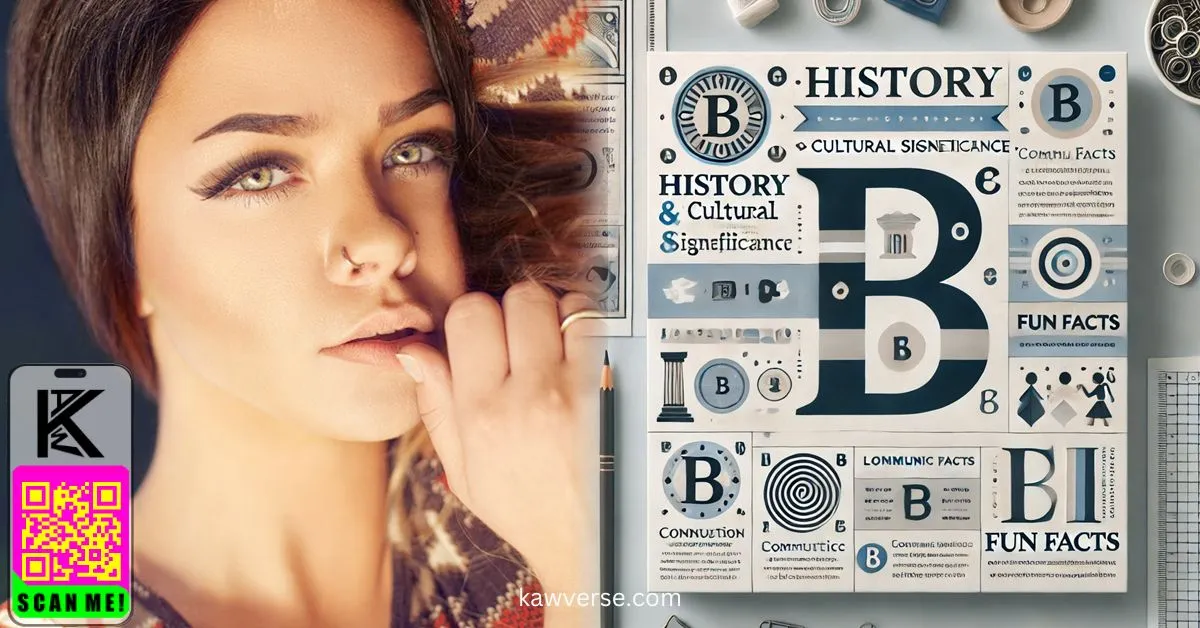
Essential facts
- Alphabet position: 2 of 26.
- Letter type: consonant.
- Uppercase and lowercase: B and b.
- Example words: book, baby, cab, lamb.
- Unicode (Basic Latin): B is U+0042; b is U+0062.
Pronunciation and spelling
B most often represents the voiced sound heard at the beginning of book and baby. In a few English words it is silent, as in lamb.
B commonly occurs at the beginning, middle, and end of English words. Double bb appears in words such as rabbit. Spellings inherited from earlier stages of English and from borrowed words explain some silent-B patterns.
For pronunciation, it is useful to distinguish alphabet letters from phonetic symbols. The IPA represents speech sounds directly; English orthography does not. As a result, the same letter may sound different across words or accents.
Why B is worth noticing
B provides a clear example of voicing in English consonants. Compare bat with pat: the mouth movement is similar, but B normally involves vocal-fold vibration while P is voiceless. Silent B in words such as lamb also shows how spelling can preserve letters that are no longer pronounced.
Common symbolic and technical uses
B is also used as a musical note name, a school grade in some systems, and a general label or variable. These uses are separate from its role as a letter in ordinary words.
A letter can function as a character in a word or as a conventional symbol. Those are different uses, and capitalization may be meaningful in technical notation.
Historical context
Like the rest of the English A–Z set, this letter reaches English through the Latin script. The Met describes how alphabetic forms moved and changed across ancient West Semitic, Phoenician, Greek, Etruscan, and Roman contexts.
From carved inscriptions to movable type and screens, the same character has been drawn in many ways. Font differences therefore represent design choices, not different alphabetic identities.
Unicode and computing
Unicode separates character identity from appearance. Basic Latin assigns a code point to each uppercase and lowercase letter, while the chosen typeface controls stroke shape, weight, and proportions. For B, the uppercase code point is U+0042 and the lowercase b is U+0062.
In technical work, changing case can change meaning. That is why copying a scientific symbol, password, command, or identifier exactly is often important.
Tips for readers and learners
- Practice B in several real words rather than attaching one broad “symbolic meaning” to the character.
- Use sound patterns as learning aids, not as rules without exceptions.
- Check a reliable dictionary when spelling and pronunciation do not line up as expected.
- Learn uppercase B together with lowercase b, including how both appear in different readable fonts.
- In educational graphics, do not rely on color or letter shape alone when essential meaning must remain accessible.
Related KAWverse guides
- English Alphabet: 26 Letters, Sounds & Learning Guide
- Alphabet A–Z: Writing Systems, Letters & English Guide
- Previous letter: A
- Next letter: C
Sources and further reading
- Cambridge Dictionary — alphabet
- The Metropolitan Museum of Art — Alphabet Origins: From Kipling to Sinai
- International Phonetic Association — IPA Chart
- Unicode Consortium — C0 Controls and Basic Latin
The source set is intentionally limited to broad references relevant to alphabet structure, phonetics, history, and Unicode. Specific words may follow exceptions or accent-dependent pronunciation.